
“Pet Friendly”
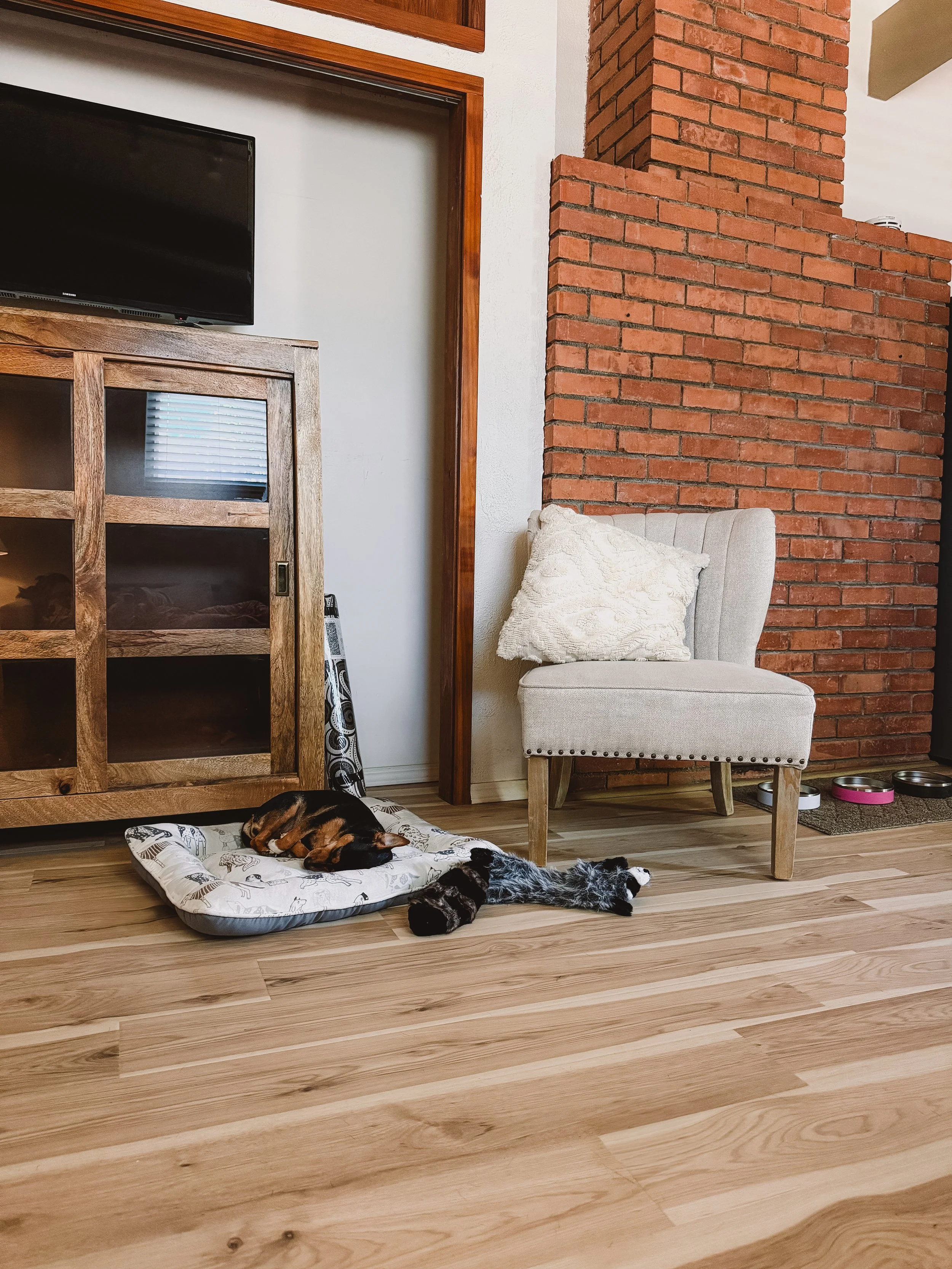
There’s a massive difference between “pets allowed” and genuinely pet friendly.
More and more accommodations are beginning to advertise themselves as pet friendly, but many of them simply allow pets … at your own risk. True pet friendly accommodations are intentionally designed with animals in mind; their safety, comfort, stress levels, and real day-to-day needs are actually considered.
I’ve stayed in accommodations that resulted in stress headaches, limited sleep, and even emergency vet visits. Experiences like that completely changed the way I evaluate “pet friendly” spaces.
After years of traveling with both dogs and cats, there are a few things that have become completely non-negotiable for me.
5 Non-Negotiable Things I Look For When Traveling With a Dog
1. Is there a grassy area easily accessible from the rooms or lobby?
We have late night potty breaks, early morning potty breaks and long travel days. Having an easily accessible place for my dog to relieve itself is essential.
Bonus points if there are:
- poop bag stations
- trash cans
- shaded walking areas
- secure walking paths away from traffic
- a secured, fenced area specifically for dogs only
A “pet friendly” hotel that requires walking across a giant parking lot to find one tiny patch of grass clearly wasn’t designed with dogs in mind.
2. Are the rooms free from poisons for rodents or bugs?
This is one of the first things I check.
Rodent bait, ant poison, slug pellets, roach traps, and pesticide sprays can seriously injure or kill pets. Dogs explore rooms with their noses first. Cats also investigate everything. My last trip with 2 of my dogs resulted in one of my dogs finding a giant blue mystery item in place I could not see, because housekeeping clearly didn’t do a thorough job. I noticed right way, so she didn’t begin eating it but it could’ve ended up in a vet visit or worse.
I want to know the property takes pet safety seriously, not only in the indoor spaces but also in outdoor areas and around landscaping.
3. Do the windows have secure screens and locking mechanisms?
Fresh air is wonderful while traveling… until a loose screen turns into an emergency.
I always check:
- secure window screens
- functioning locks
- gaps large enough for curious noses or paws
- balconies with unsafe spacing
4. Is the room quiet and realistically pet-friendly?
Some “pet friendly” rooms are directly beside elevators, slamming doors, busy lobbies, or high traffic walkways.
That setup can create stress, barking, anxiety, reactivity, and poor sleep for both pets and owners.
I look for accommodations that understand dogs need decompression too. If a room notes that it is soundproof, that is such green flag for me.
5. Is there safe flooring and enough room to settle comfortably?
Slippery floors can be difficult for senior dogs, nervous dogs, puppies, or large breeds.
I also pay attention to:
- cramped layouts
- sharp furniture edges
- unsafe decor placement
- fragile items at tail height
- enough space for crates or dog beds
A room can technically allow dogs while still being impractical for actually living in comfortably for several days. I always try to look for as many photos as possible. On various websites and from past guest reviews.
Next up, CATS…
5 Non-Negotiable Things I Look For When Traveling With a Cat
1. Is the room fully enclosed with no obvious escape routes?
Cats can squeeze through unbelievably small spaces.
Before unpacking, I check:
- under beds
- behind appliances
- damaged screens
- loose ceiling tiles
- gaps behind furniture
- balcony access
- hidden crawl spaces (above and below)
One tiny opening can turn a peaceful trip into a nightmare.
2. Are the rooms free from poisons for rodents and bugs?
Cats are extremely sensitive to many chemicals and toxins.
Even products considered “safe” for humans or dogs can become dangerous for cats, especially because they groom themselves constantly.
3. Is there at least one minimalist room option free from clutter and toxic plants?
Cats climb. Cats knock things over. Cats chew plants.
Minimalist rooms reduce:
- stress
- overstimulation
- hiding spots that are difficult to access
- breakable decor hazards
I especially appreciate accommodations that avoid toxic plants.
4. Do the windows and doors lock securely?
Cats can learn handles faster than people realize.
I always check:
- window locks
- screen security
- balcony doors
- room doors that latch fully
- adjoining room doors
Traveling with a cat requires thinking several steps ahead.
5. Is there a quiet place for decompression?
Cats often need time to settle after travel.
Loud hallways, constant housekeeping interruptions, barking dogs nearby, or heavy foot traffic can create enormous stress.
A calm environment makes a massive difference.
Bonus Points for Places That Truly Go Above and Beyond
1. Providing a dog/cat bed or furniture blanket
This tells me they expect pets, not merely tolerate them.
2. Providing food and water bowls
Small gesture. Huge convenience.
3. Offering multiple designated pet relief areas or walking trails
Especially valuable after long travel days.
4. Having staff that genuinely understand animals
You can immediately tell the difference between:
“Pets are allowed.”
and
“We actually welcome pets here.”
5. Providing clear pet policies without making owners feel like a burden
Good pet policies create safety and clarity without sounding hostile.
6. Providing treats
Although I realize that many dogs have food allergies/sensitivities, so this is a tough one for properties to justify, and many pet parents won’t even give the treats to their pets. It’s still a super kind gesture when it is done.
What did I miss? What has been your favorite pet friendly hotel?